Monday, 1 August 2016

Diplomat: Syria Ready to Resume Peace Talks Without 'Preconditions'

Diplomat: Syria Ready to Resume Peace Talks Without 'Preconditions'

FILE - UN special envoy for Syria Ramzy Ezzeldin Ramzy.
The Syrian government says it is ready to resume United Nations-sponsored peace talks with the opposition in Geneva at the end of August, "without preconditions without any external interference."
Sunday's announcement, reported by Syria's state news agency, followed talks in Damascus between U.N. special envoy Ramzy Ezzeldin Ramzy and Syrian Deputy Foreign Minister Fayssal Mikdad.
Mikdad did not offer details, and it remained unclear late Sunday whether the talks yielded progress on the impasse over the future of embattled President Bashar al-Assad -- an impasse that helped scuttle two earlier rounds of talks.
Western governments have insisted that Assad leave the presidency as part of any enduring peace deal, while Assad allies, most notably Russia, are battling alongside Syrian forces to preserve Assad's hold on power.
Two weeks of peace talks in April and an earlier truce crumbled when no deal on Assad's future could be reached, and when fighters on both sides of the country's deadly civil war largely ignored cease-fires.
The failed April talks also led the chief peace negotiator for Syria's mainstream opposition, Mohammed Alloush, to quit his post weeks later. Alloush linked his departure to ongoing violence, which he blamed on the Assad government and Assad's Russian military allies.
Monitors cite gains by U.S.-backed forces near Turkish border
In other developments, the Britain-based London Observatory for Human Rights says U.S.-backed forces have driven Islamic State extremists from 70 percent of the besieged city of Manbij near the Turkish border.
FILE - Smoke and flame rise after what fighters of the Syria Democratic Forces (SDF) said were U.S.-led air strikes on the mills of Manbij where Islamic State militants are positioned, in Aleppo Governorate, Syria, June 16, 2016.
An Observatory statement Sunday said the so-called Syrian Democratic Forces had seized most of the eastern city, and says an estimated 2,300 civilians have been able to flee in the past 24 hours.
U.S. analysts describe Manbij, located about half way between war-ravaged Aleppo and the border town of Kobane, as one of the most important pieces of real estate in the war. U.S. Secretary of Defense Ashton Carter has called it a pivotal corridor from the Islamic State stronghold of Raqqa to the outside world through Turkey.
The monitor also quotes activists and residents who have reported dozens of civilian deaths from airstrikes linked to the U.S.-backed alliance of Kurdish fighters and Arab allies. The alliance, backed by U.S. Special Forces, launched a campaign in June to drive Islamic State fighters from their last positions on the Syrian-Turkish frontier.
Aid workers report hospital bombing in south
Separately, the International Rescue Committee said airstrikes targeted a hospital in the southern opposition-controlled town of Dara'a, killing at least six people. The reports offered few details, and the identity of the aircraft was not clear late Sunday.
However, the New York-based Physicians for Human Rights says more than 90 percent of attacks on medical facilities in Syria have been carried out by government forces

Monday, 11 July 2016

North Korea Cuts Diplomatic Communication With US

North Korea Cuts Diplomatic Communication With US
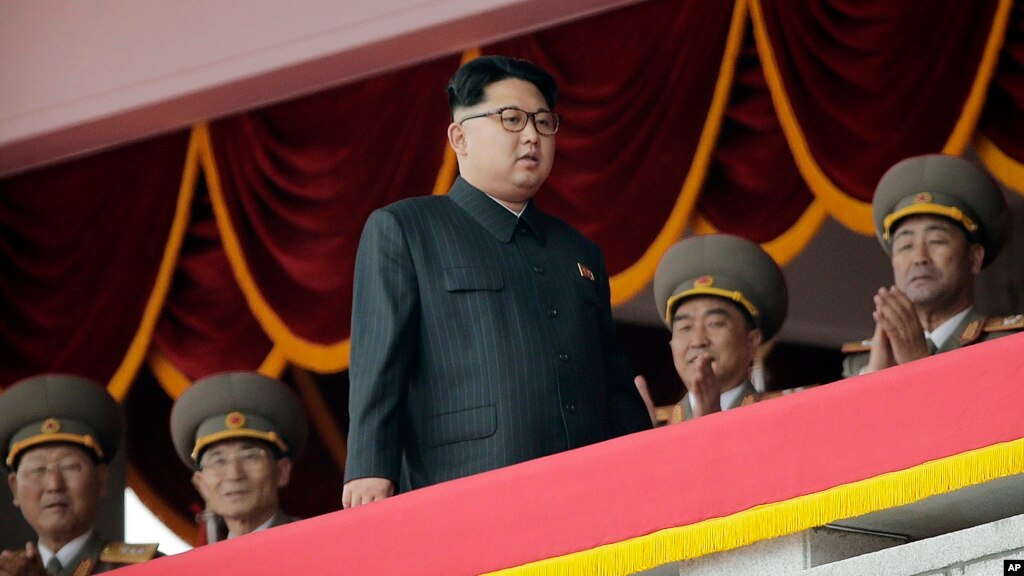
FILE - North Korea's leader Kim Jong Un watches a parade from a balcony at the Kim Il Sung Square in Pyongyang.
North Korea says it is closing one of the last lines of communication with the United States in retaliation for Washington placing sanctions on leader Kim Jong Un for human rights abuses.
Pyongyang said Monday it has told the U.S. the North is effectively ending all diplomatic communications with Washington that have been conducted through the U.N. offices in New York.
Last week, the U.S. placed personal sanctions on Kim and several other North Korean officials, in addition to sanctions already in place on the country for Pyongyang's nuclear weapons program.
Earlier Monday, North Korea threatened to take "physical action" after the U.S. and Seoul announced plans for deployment of a sophisticated missile defense system in South Korea.
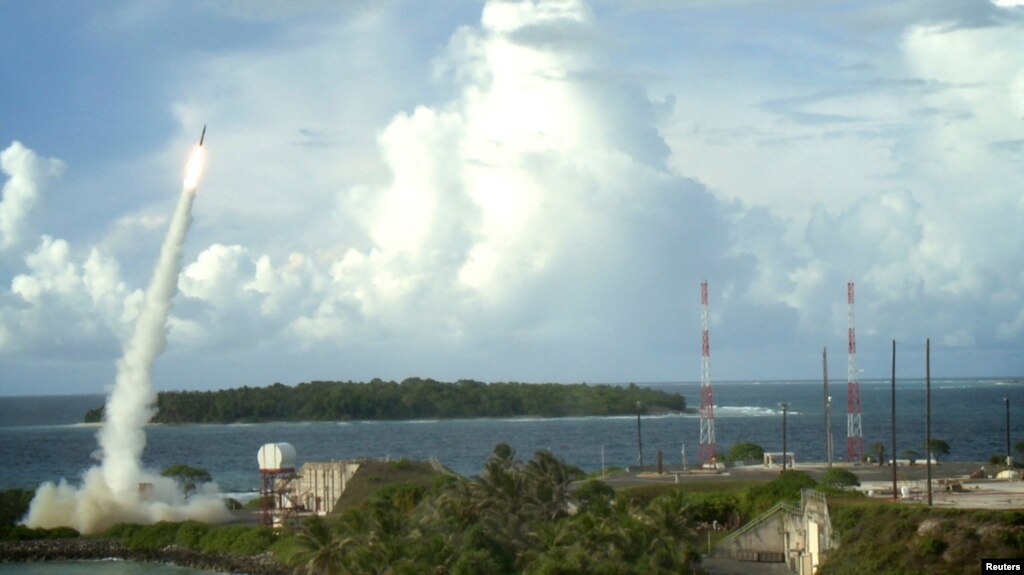
Pyongyang made the threat several days after Washington and Seoul revealed plans to use the Terminal High Altitude Area Defense system — THAAD — on the Korean peninsula following a series of ballistic missile and nuclear tests by Pyongyang.  The location and timing of the deployment have not been announced.
A Terminal High Altitude Area Defense (THAAD) interceptor is launched during a successful intercept test, in this undated handout photo provided by the U.S. Department of Defense, Missile Defense Agency.
Pyongyang's official KCNA news agency, using its typical bellicose style, said "It is the unwavering will of our army to deal a ruthless retaliatory strike and turn (the South) into a sea of fire and a pile of ashes the moment we have an order to carry it out." Pyongyang said the "physical response" will take place the moment the time and location of THAAD have been confirmed.
China and Russia, as well as North Korea have expressed strong opposition to the deployment of THAAD and urged Washington and Seoul to put a stop to it. 
South Korean President Park Guen-hye said Monday the THAAD system is only intended as a defensive measure against the North, and is not targeted against any other country.
The latest ballistic missile test by Pyongyang took place late last week when a missile was fired from a submarine off the coast of the port city of Sinpo. The missile was reported to have exploded after traveling about 10 kilometers into the air, similar to a failed test in April.  Western military officials, however, say Pyongyang's abilities improve with every test.
The submarine missile launch came one day after Washington and Seoul announced plans to deploy THAAD.
China, as North Korea's key ally, has urged the government of President Kim to return to international talks and dismantle its nuclear program in return for economic assistance and security guarantees.
Pyongyang is already under various U.N. and U.S. sanctions for its nuclear and ballistic missile programs
.

Thursday, 7 July 2016

North Korea: US Sanctions on Kim a 'Declaration of War'

North Korea: US Sanctions on Kim a 'Declaration of War'
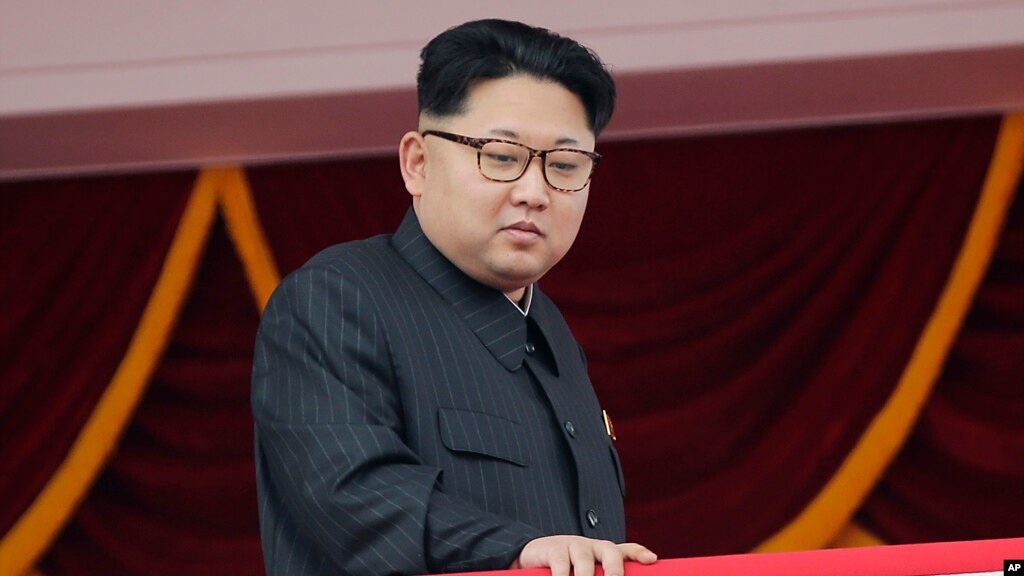
FILE - North Korean leader Kim Jong Un watches parade participants from a balcony at the Kim Il Sung Square in Pyongyang, North Korea, May 10, 2016.
North Korea said Thursday that the most recent U.S. sanctions imposed on its leader, Kim Jong Un, amounted to a "declaration of war" and vowed to take strong retaliatory measures against "the worst-ever hostile act."
On Wednesday, the U.S. blacklisted Kim, along with 10 other people and five government ministries and departments, for the first time over human rights abuses.
"Under Kim Jong Un, North Korea continues to inflict intolerable cruelty and hardship on millions of its own people, including extrajudicial killings, forced labor and torture," Adam Szubin, the U.S. Department of Treasury's acting undersecretary for terrorism and financial intelligence, said in a statement.
In its first response to the U.S. action, Pyongyang urged Washington to withdraw the sanctions immediately, warning that the North would otherwise sever all diplomatic channels.
Ten other top officials were accused by the U.S. of being behind widespread abuses that have made North Korea "among the world's most repressive countries."
South Korea welcomed the U.S sanctions, saying it hoped the move would shine a light on human rights "violations" in the North
.

Wednesday, 6 July 2016

Probe: Companies Worth $200M Linked to Cambodian PM's Family


An investigation by London-based Global Witness has uncovered an intricate network of Cambodian companies with a listed value of about $200 million, all tied to the family of the country's autocratic prime minister, Hun Sen.
“This is likely just the tip of the iceberg,” the report,Hostile Takeover, said.
The report does not include the family's real estate assets, which are extensive, but quotes experts as saying the clan's total value could be between $500 million and $1 billion.  
It's an enormous sum, given Hun Sen insists he makes just $13,800 a year as prime minister and head of the Cambodian People's Party (CPP).
Gap between rich and poor
About 40 percent of Cambodians live near or below the poverty line, another 40 percent of children are malnourished, and the wealth divide between rich and poor is emerging as a major social issue.
The oldest sons, Manet and Many, were mentioned in the report, along with the prime minister's wife, Bun Rany, who heads the Cambodian Red Cross — which Hostile Takeover says does little to hide its political allegiances and is often referred to as the “humanitarian wing” of the CPP.


But it was the eldest daughter, Mana, who emerged as the most successful of the clan. She is just one of two people whose companies have controlling interests in television, radio and newspaper outlets. The other is CPP Senator Ly Yong Phat, a close ally of Hun Sen.
Hostile Takeover sheds light on a huge network of secret deal-making and corruption that has underpinned Hun Sen’s 30-year dictatorial reign of murder, torture and the imprisonment of his political opponents,” Global Witness said.
Company ties
The report found the Hun Sen family held interests in 114 companies that spanned nearly every facet of the Cambodian economy, including the mining, agriculture, electricity, media, garment, forestry and transport industries.
Of these, 103 companies counted a family member as chairperson; 44 companies included family members as a significant owner, with a minimum 5 percent stake; and 33 companies had a family member listed as the sole owner.
It said those companies held links to many international brands such as Apple, Visa, Procter & Gamble, Tommy Hilfiger and Polo Ralph Lauren, and much of the data was garnered online from the government's own companies registry. Access, however, has since been restricted.
“That $200 million figure represents the listed asset value of the companies, and we believe that the true figure is likely to be much higher for a couple of reasons,” said Global Witness co-founder Patrick Alley. “One of which is the listed asset value, which is the value when the companies were created, is very likely higher than that — and also we can only talk about the companies which we have definitely found links to.
“And we believe that the family very likely own lots of companies which are hidden behind nominee directors — anonymously owned companies which we obviously can only stab at. We've heard over the years figures of $500 million and $4 billion, but we can't verify that.”

Crackdown on opposition
The report landed at a critical point in Cambodia, where supporters of the opposition Cambodian National Rescue Party (CNRP) have faced arbitrary arrest and jail. Last year, two CNRP members of parliament were viciously bashed outside the National Assembly.
The CPP crackdown came as both parties begin gearing up for the campaign trail, with commune elections due this time next year and national elections a year later.
Hun Sen and his CPP were stunned by an electoral backlash in 2013, when the government was returned to power but with a sharply lower majority amid CNRP claims the government had rigged that poll while intimidating the electorate into voting its way.
Stephen Peel, former senior partner at private equity firm TPG Capital and a Global Witness board member, said too many company officials viewed corruption as a legal challenge and as an issue to get around as opposed to dealing with it from a moral and ethical standpoint.
“Companies should think hard and deeply before they get engaged in any sort of business relationship, be it investment or be it joint ventures, franchise agreements, distribution agreements, with these types of regimes,” he said.
Alleged ties to crime
Hostile Takeover also mentioned the prime minister's nephew, Hun To, who has denied allegations that he was involved with a heroin-smuggling and money-laundering ring targeting Australia.
“The Hun family includes members once implicated in a $1 billion heroin-smuggling operation, shootouts, a fatal hit-and-run, and land grabs that have caused mass displacements and destitution among Cambodia’s rural poor,” it said.
A government spokesman was unavailable for comment, and Global Witness said letters were sent to 25 members of the prime minister’s family asking for a response. One response was received, but Global Witness said it failed to address any of the allegations.
Global Witness said the the report should serve as a warning to investors who are urged to conduct stringent due diligence in Cambodia and report any evidence of corruption to international authorities. It has also called on the Hun family to make a full and public disclosure of its assets.